
Dispatch · June 23, 2026 · 7 min · By Ulric Tavernier
Sagging jowls: what at-home care can fix, and when you need the office
Creams and gadgets have a real but narrow role. Knowing where it ends saves money.
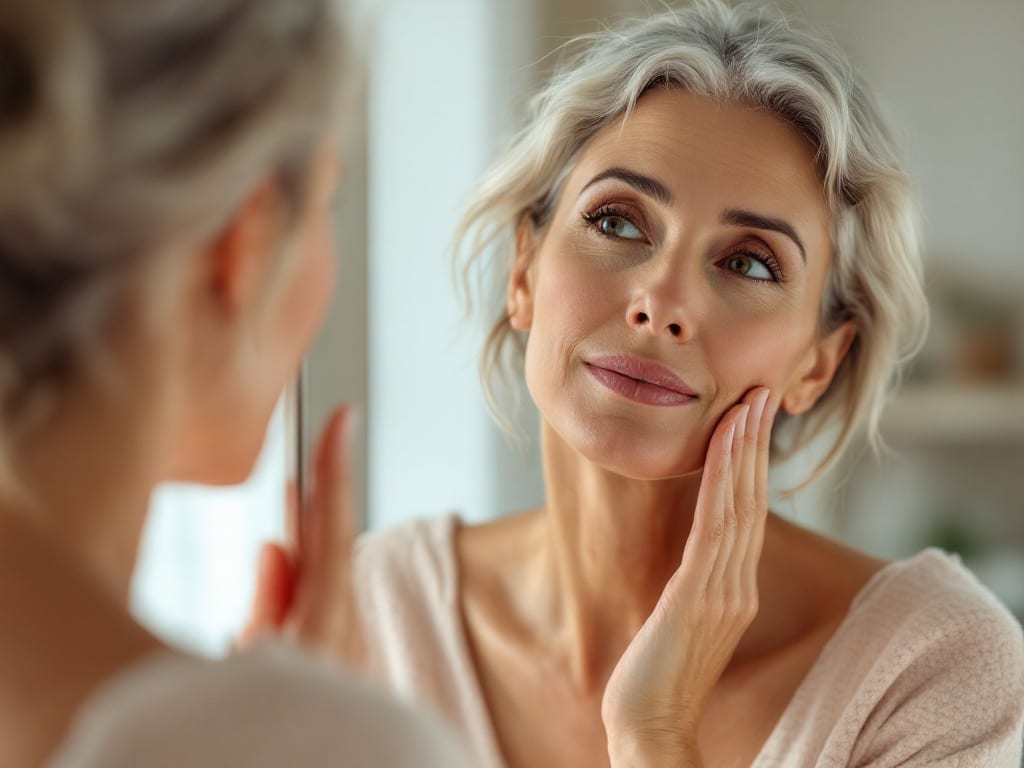
Jowls, the softening along the jawline where the lower face begins to descend, are one of the first places sagging becomes obvious. They also attract a huge amount of at-home marketing, from firming creams to facial massage tools, so it is worth separating what home care can actually do from what needs a clinic.
At home, the honest wins are preventive and marginal. A retinoid and daily sunscreen slow the collagen loss that lets jowls form, and keeping a stable weight avoids the stretch-and-deflate cycle that worsens them. Facial exercises and rolling tools may briefly firm the look through temporary swelling, but there is little evidence they lift jowls in any lasting way. Home care is best understood as maintenance that delays the problem, not a treatment that reverses it.
Once jowls are visibly formed, the effective options move in-office. Early jowling responds to radiofrequency and microneedling RF, which firm the skin and stimulate collagen, while deeper devices and focused ultrasound can add a modest lift. These are gradual and subtle, but they do something creams cannot.
When jowls are pronounced and there is genuine loose skin hanging along the jaw, energy devices reach their limit. At that stage a lower facelift, which repositions tissue and removes excess skin, is the treatment that actually corrects them, and no topical or device substitutes for it.
The practical rule is to use home care to delay, in-office energy treatments for early to moderate jowling, and surgery when laxity has advanced. Spending on firming creams to fix established jowls is the most common way people waste money on this particular problem.
Further reading: A Systematic Review of the Efficacy of Microfocused Ultrasound for Facial Skin Tightening (Int J Environ Res Public Health 2023); Facial skin ageing: Key concepts and overview of processes (Int J Cosmet Sci 2022); Fighting against Skin Aging: The Way from Bench to Bedside (Cell Transplant 2018).