
Dispatch · July 22, 2026 · 7 min · By Ulric Tavernier
Skin tightening for darker skin tones: what is safe and what raises the risk
Melanin changes how energy devices behave. Which tightening treatments are pigment safe, where the real risk sits, and what to ask before booking.
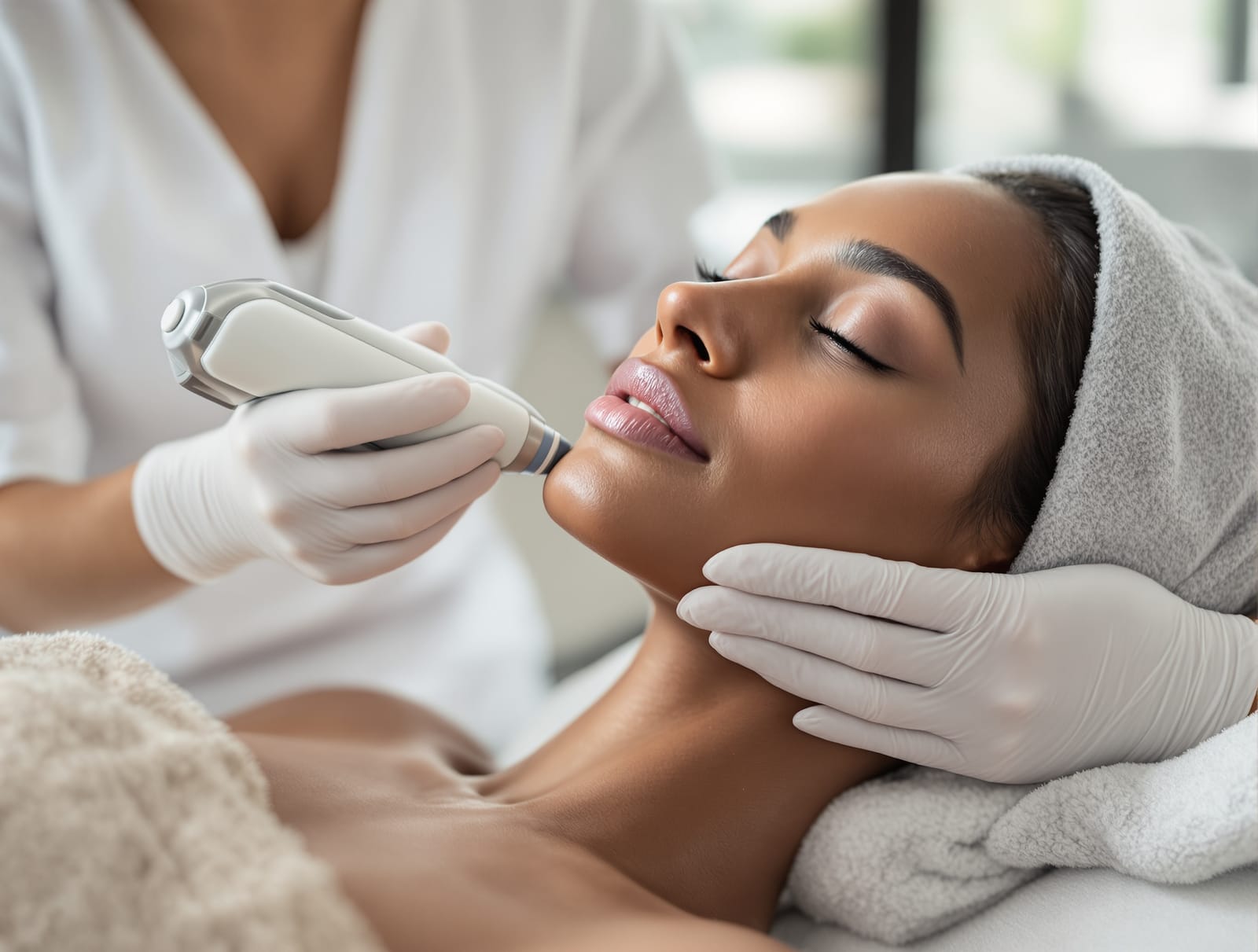
Almost everything written about skin tightening quietly assumes one kind of skin. Yet the single factor that most changes how these treatments should be delivered is how much pigment the skin being treated contains. Melanin absorbs light, and any device that works by pushing light energy into the skin has to reckon with that. Get it wrong and the result is not just a disappointing lift but a patch of discoloration that outlasts the treatment by months. Get it right and people with brown and Black skin have the same access to firming as anyone else. The honest picture is more encouraging than the horror stories suggest, but it depends heavily on which technology is chosen and who is holding it.
Why melanin changes the calculation
Light-based devices work by aiming energy at a target that absorbs it. Melanin, which sits mostly in the outer layer of the skin, is a very efficient absorber. In deeply pigmented skin, a share of the energy meant for the deeper layers is intercepted at the surface instead, heating the epidermis more than intended. That extra surface heat is what drives the two problems that dominate the literature on skin of color: post inflammatory hyperpigmentation, meaning dark marks that appear after the skin is irritated, and less commonly hypopigmentation, meaning pale patches where pigment cells have been damaged. Burns and blistering sit at the far end of the same spectrum. The American Academy of Dermatology puts it plainly in its guidance on laser treatment: lasers can be used on all skin types, but darker skin is more prone to burns and dark marks, and the person operating the device should have real experience treating skin like yours (AAD). Providers usually describe skin tone for this purpose using the Fitzpatrick scale, where types four through six cover most brown and Black skin, but the scale is a rough proxy rather than a precise measure, and a careful assessment looks at your actual history of scarring and dark marks as well.
The treatments with the least pigment risk
The encouraging part is that the two workhorse tightening technologies are not light based at all. Radiofrequency does not use light and is not absorbed by melanin. It heats tissue through the resistance the skin offers to an electrical current, so it passes through pigment rather than being caught by it. In practical terms that makes radiofrequency and radiofrequency microneedling among the most pigment neutral firming options available, which is precisely why they are so often recommended for skin of color. Focused ultrasound is similar in this respect: it delivers acoustic energy to a set depth rather than light to a colored target, so reaching the deeper support layer does not depend on skin tone either. A review of laser and light based therapy in richly pigmented skin reached the same conclusion, listing radiofrequency devices among the technologies used safely for resurfacing and tightening in Fitzpatrick types five and six (British Journal of Dermatology review). Threads are mechanical rather than energy based, so pigment is not the issue there, though anyone with a history of keloid or thickened scars should raise it, since every entry point is a small wound.
Where the risk actually sits
The higher risk category is the light based one. Ablative and fractional resurfacing lasers, and intense pulsed light in particular, rely on light being absorbed, and in deeply pigmented skin the margin between an effective setting and an injurious one narrows considerably. That does not put them off limits, and experienced hands use longer wavelengths and gentler parameters to treat skin of color successfully every day, but it does mean the choice of device and operator matters far more than it does in pale skin.
The second risk is subtler and applies even to the pigment neutral devices: inflammation itself can trigger dark marks. Skin of color responds to injury by making pigment, so an aggressive microneedling pass, a small burn from an overheated handpiece, or a blister that gets picked can all leave a mark that lingers for months after the underlying skin has healed. The device being melanin blind does not make an overly aggressive treatment safe. This is the same principle behind the wider side effect and safety picture for these treatments, amplified by how readily pigmented skin reacts.
What a careful provider does differently
Good practice in skin of color is mostly a matter of restraint and sequencing. Expect a test patch in a discreet area before a full treatment on any light based device. Expect conservative energy settings and more sessions rather than fewer aggressive ones, with longer intervals between them so the skin fully settles. Expect questions about your history: whether cuts and spots leave dark marks, whether you scar thickly, what you are using on your skin now. Retinoids and pigment lightening agents are sometimes paused or started ahead of treatment depending on the plan, and rigorous sun protection afterwards is not optional, because ultraviolet exposure on freshly treated skin is a reliable way to turn a mild reaction into a lasting one. A provider who screens for none of this and reaches straight for the machine is the risk factor, not the technology.
Make sure you are treating the right problem
One useful check before booking anything: many people who feel their skin looks tired and uneven are describing texture and tone rather than true laxity. Those are different problems with different fixes, as covered in crepey skin versus sagging skin, and treating a pigment or texture concern with a tightening device is a common way to spend money without solving anything.
Questions worth asking
Bring three specific questions to the consultation beyond the usual ones. First, how many patients with my skin tone have you treated on this device, and can I see their photographs rather than manufacturer images? Second, will you do a test patch, and how long will you wait before treating the full area? Third, what is your plan if I do develop dark marks afterwards, and is that follow up included? A clinic that answers all three comfortably has done this before. A clinic that treats the question as an odd one has not.
The takeaway
Skin tightening is available to every skin tone, but the safe route through it is narrower for pigmented skin. Radiofrequency, radiofrequency microneedling, and focused ultrasound are the least pigment dependent options and are a sensible starting point. Light based resurfacing can work well but demands a device and an operator chosen specifically for darker skin. In every case the real safeguard is conservative settings, a test patch, and a provider with genuine experience, because in skin of color the cost of an overly enthusiastic treatment is not just a poor result but a mark that takes months to fade.
Related reading: Side effects of skin tightening: what can go wrong, and how often it does.